Calligraphy & Lettering · Germany
Letters drawn slowly, by hand.
Quaionver collects clear, unhurried notes on the foundations of calligraphy and lettering: the tools that shape a stroke, the geometry behind a letterform, and the blackletter writing that took root in German printing and manuscript culture.

What this site covers
Three foundations, written for beginners.
Calligraphy rewards patience over speed. These pages stay close to the practical questions a beginner actually runs into: which pen to hold, how a letter is built from a few repeated strokes, and why German blackletter looks the way it does.

Writing Tools and Inks
Broad-edge nibs, pointed nibs, brushes and the inks that suit each — a plain look at what shapes a stroke.

Basic Letterforms and Strokes
How letters are constructed from a small set of repeated strokes, pen angle, and consistent spacing.
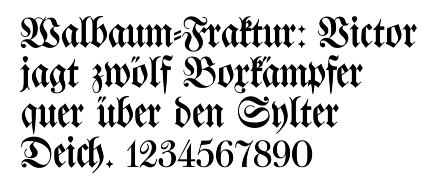
The Blackletter Tradition in Germany
Textura, Schwabacher and Fraktur — the angular hands that defined German writing and print for centuries.
A practice routine
A short, repeatable warm-up
Most calligraphy sessions begin the same way: a few minutes of drills before any words. The point is muscle memory, not finished pieces.
- Check your pen angle. For broad-edge hands, hold the nib at a fixed angle to the writing line and keep it constant.
- Pull basic strokes. Practice vertical downstrokes, then curves, keeping pressure even.
- Build a few letters. Combine the strokes into related letters, such as the family of letters that share an arch.
- Write a single word slowly. Spacing between letters matters as much as the letters themselves.
Reading the stages
From observation to finished line
It helps to name what you are doing at each moment. A practice page tends to move through recognizable stages:
Contact
Questions or corrections
If you spot an inaccuracy or want to suggest a topic on calligraphy fundamentals, you can write using the form. This form runs only in your browser for demonstration and does not transmit data to a server.
Email: editor@quaionver.eu
Location: Germany